Hook & Demo Videos: The TikTok Format That Sells Apps
What a Hook & Demo video is, why it works for apps, how to structure the reaction and demo parts, and how to make many variations without filming.

If you've scrolled TikTok and seen someone react with surprise, then the video cuts to an app on a phone screen, you've seen a Hook & Demo video. It's one of the most common formats app companies use, because it's short, honest and easy to repeat.
What a Hook & Demo video is
It has two parts:
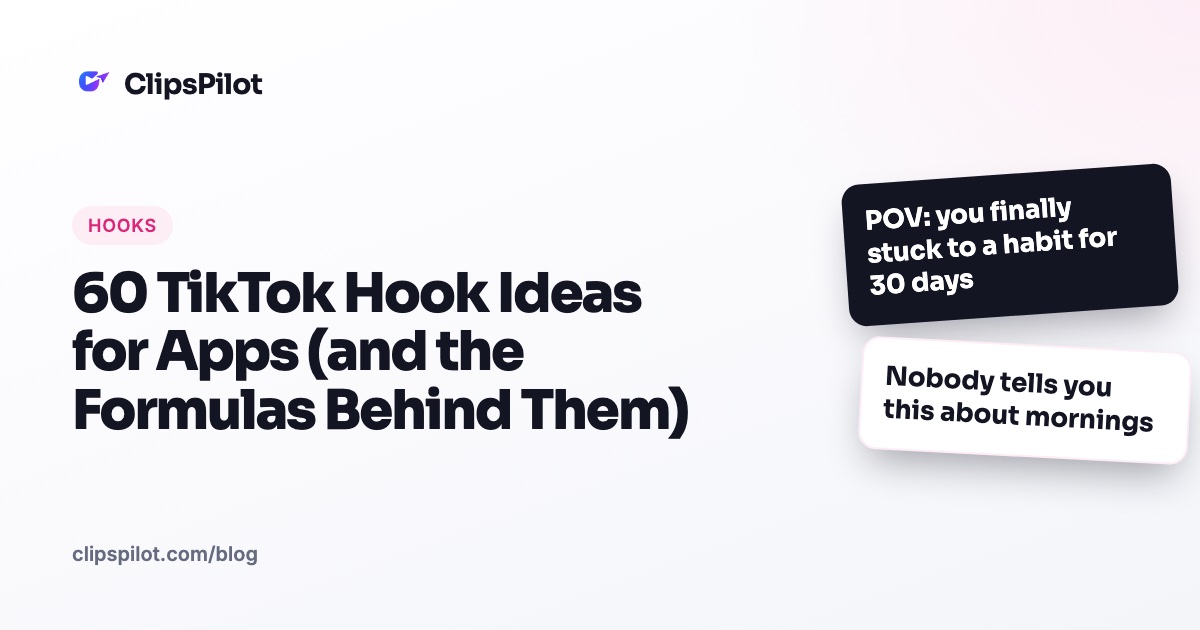
- The hook (1–3 seconds). A reaction clip of a person looking surprised, excited or relieved, with a line of text on screen, like "POV: you finally stuck to a habit for 30 days".
- The demo (5–15 seconds). A screen recording of your app doing the thing the hook promised.
Often a trending or upbeat sound plays over both.
Why it works
- Emotion first. A human face reacting stops the scroll faster than a screen recording on its own.
- Proof second. The demo shows exactly what the viewer gets, so the hook's promise feels earned.
- It's short. Most Hook & Demo videos are well under 20 seconds, which helps people watch to the end.
- It's repeatable. Swap the hook, the reaction or the demo clip and you have a new video. That's what makes it ideal for testing.
Writing the hook text
The on-screen text does most of the work. Keep it:
- Outcome-focused: what the viewer gets, not what the app is called.
- Short: readable in a second.
- Matched to the reaction: a shocked face goes with a surprising claim; a relieved face goes with a solved problem.
Need ideas? Start with 60 TikTok hook ideas for apps.
Recording the demo
- Show one thing. One feature, one outcome. Don't tour the whole app.
- Start mid-action. Skip loading screens and menus.
- Keep it vertical and use the phone's own screen recording for crisp text.
- Make the result obvious. End on the moment the problem is solved: the full streak, the cleared inbox, the finished plan.
Record a handful of demo clips covering your best features. You'll reuse them constantly.
The reaction clip
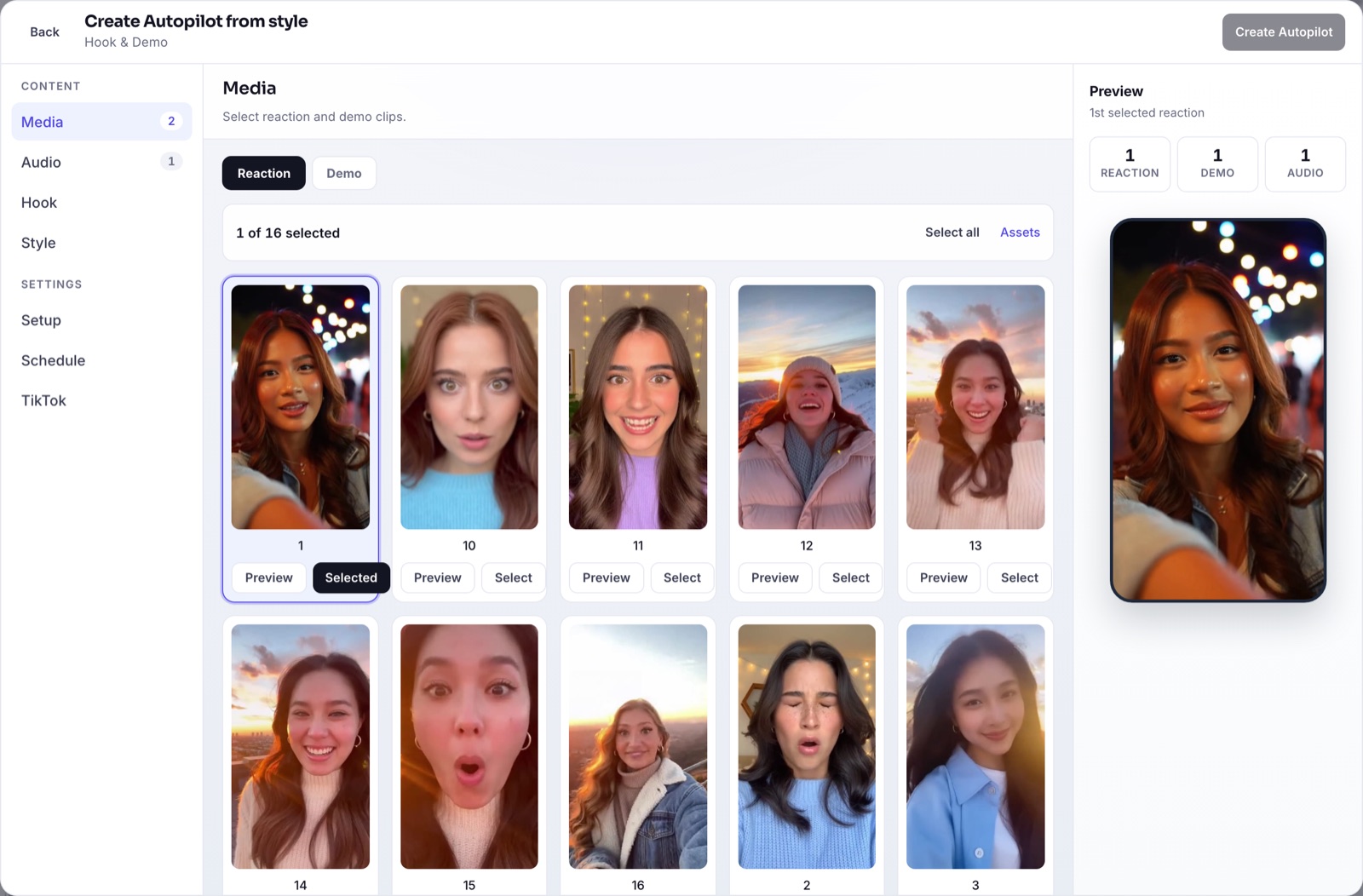
You can film your own, ask friends, or use stock reaction clips. What matters is that the expression is clear in the first frame and it matches the hook. Vary the people and expressions so your feed doesn't look repetitive.
Making variations at scale
The real power of Hook & Demo comes from volume. With five reaction clips, five demo clips and twenty hooks, you have hundreds of possible videos. Posting a new combination every day lets you find what works without filming anything new.
This is exactly what ClipsPilot's Hook & Demo Autopilot automates, as part of its TikTok automation. Upload your demo clips once (built-in reaction clips and sounds are included), give it a direction for the hooks, and it creates a new combination each run: a different reaction, demo, sound and AI-written hook. It then posts to your TikTok accounts on your schedule, or sends to drafts if you want to check them first. See how it works.
Common mistakes
- A hook the demo doesn't deliver. People feel tricked and swipe away.
- A demo that's too long. If the payoff takes more than a few seconds to appear, viewers leave.
- Tiny text. Check the hook on an actual phone.
- Posting one version. The format only works when you test many hooks.
FAQ
How long should a Hook & Demo video be?
Usually 8 to 20 seconds. The reaction and hook take a few seconds; the demo should show the payoff quickly.
Do I need real people for the reaction clip?
You need a clear human reaction. That can be you, friends, creators you work with, or licensed stock clips.
Is this format only for ads?
No. It works as organic content too, and organic posts are a good way to find winning hooks before you spend on ads.